01
Founder · Product · Engineering
Teemzo
An owned product that reflects how I approach narrow customer problems: learn the workflow, find the leverage point, and build the smallest useful system around it.
Visit Teemzo →Bobby Cavezza · Product and engineering partner
You might have an idea, a spreadsheet, or a working prototype you built with AI. The next step is the same either way: get honest about the customer problem, cut the scope to the smallest useful version, build it properly, and find the architecture, security, and infrastructure risks while they are still cheap to fix.
Work shaped around the problem, not a preset package

An owned product that reflects how I approach narrow customer problems: learn the workflow, find the leverage point, and build the smallest useful system around it.
Visit Teemzo →An owned product and ongoing proving ground for product strategy, application architecture, automation, and the unglamorous work required to keep software useful.
Visit DeltaRival →We focus on the most important uncertainty or technical constraint in front of the business, then move from judgment into hands-on work when building is the right next step.
Every engagement is scoped around the client, stage, and work. We align on the immediate problem, priorities, and working approach before starting.
Get the real business constraint, customer, and decision on the table.
Separate the smallest proof from the features that can wait.
Leave with a plan you can build with me, hand to another engineer, or decide not to pursue.
I’m Bobby Cavezza, a software engineering manager, startup founder, and hands-on engineer. I work across customer-problem validation, product definition, architecture, implementation, and early security and infrastructure decisions, which means the recommendation and the code do not come from separate rooms.
I’m useful when a founder needs someone who can challenge the premise, make the tradeoffs explicit, and still get into the details.
I build with AI every day and think it is the best thing to happen to early-stage software in years. It makes a first version cheap to attempt, which is exactly why the expensive questions have moved. What to build, what to leave out, and what will quietly break under real usage are still judgment calls, and that is the work I do.
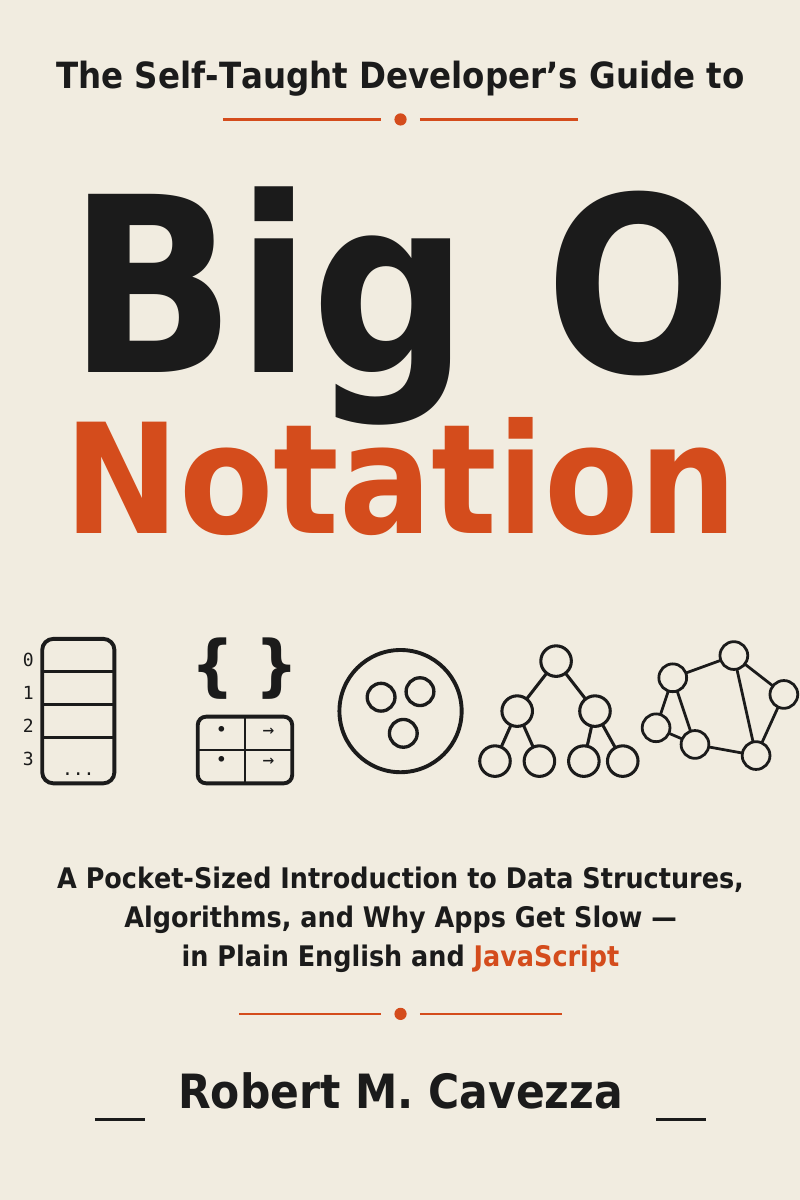
A practical guide to the performance ideas that often get buried under math-heavy explanations, written for working developers who learned by building.
A useful first note includes the customer, the problem, what exists today (including anything you built with AI), and the decision you need to make. If I am not the right person for the work, I will say so.